Errors down, confidence up
Evidence-based design decisions reduced major onboarding errors by 47%, transforming a clinically-oriented experience into one built for everyday users at home.
Tested, validated, traceable
Two rounds of user testing and an internal validation phase saw 11 of 16 benchmarks exceed 80% success rate, with 7 hitting 100% accuracy.
Workshop to hi-fi prototype
We delivered a fully scoped, human factors-evidenced design handover in 1.5 months, giving ChestPal's internal team everything they needed to build with confidence.
ChestPal was founded on a simple but powerful belief: that detecting serious respiratory conditions shouldn't require multiple trips to the clinic. When Helena found herself repeatedly taking her baby daughter in for persistent coughing, she began asking why there wasn't a better way to check lung health from home. That question became ChestPal™Pro, a smart stethoscope and app designed to make early detection accessible to everyone.
They came to us through our Impact Builder programme which supports startups with cash funding and digital product execution. They had a clear but complex brief: a working device and a proven market, but a need to pivot. What had originally been designed for European medical professionals now needed to work for everyday US citizens at home, requiring a fundamental rethink to meet FDA approval and succeed in a highly regulated American market.
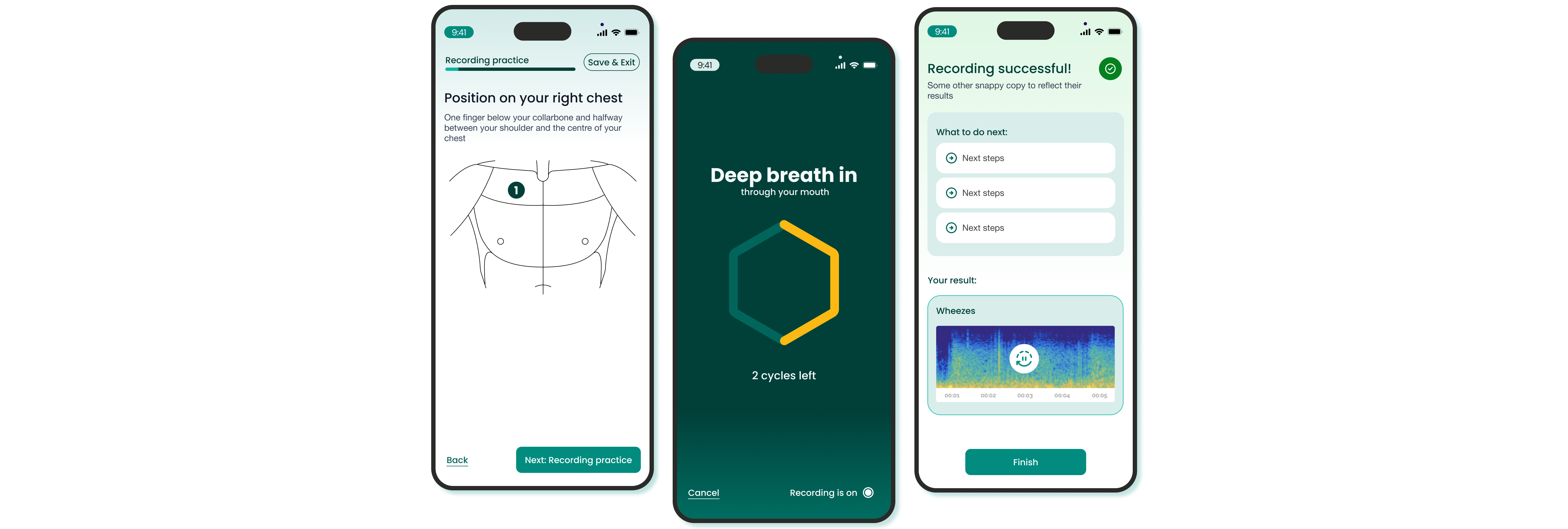
Over the 1.5 month project, we redesigned the onboarding experience from the ground up, transforming it into something intuitive, accessible, and reliable for the average user. This shift was essential not just for usability, but for the safe and effective use of the product itself.
For more on our approach to onboarding, see our How to Turn First Users into Loyal Champions article.
ChestPal had already built something impressive. Their smart stethoscope uses AI to analyse audio recordings of a user's breathing, picking up on crackles, wheezes, and other indicators that can signal something worth investigating. The technology was there and the clinical market had validated the concept, but the app had been built for a very specific user: a European medical professional who knew exactly what they were looking at.
Reaching everyday US consumers meant rethinking the onboarding experience from the ground up. The product hadn’t changed, but they now needed to meet a completely different audience. The new target user was aged 30 to 45, managing their own respiratory health or their child's, and needed to feel confident and guided at every step, without any clinical background to fall back on.
There was an added layer of responsibility too. Designing for a home-use medical device in the US meant needing FDA approval which requires rigorous human factors evidence, with every design decision needing to be traceable, tested, and documented.
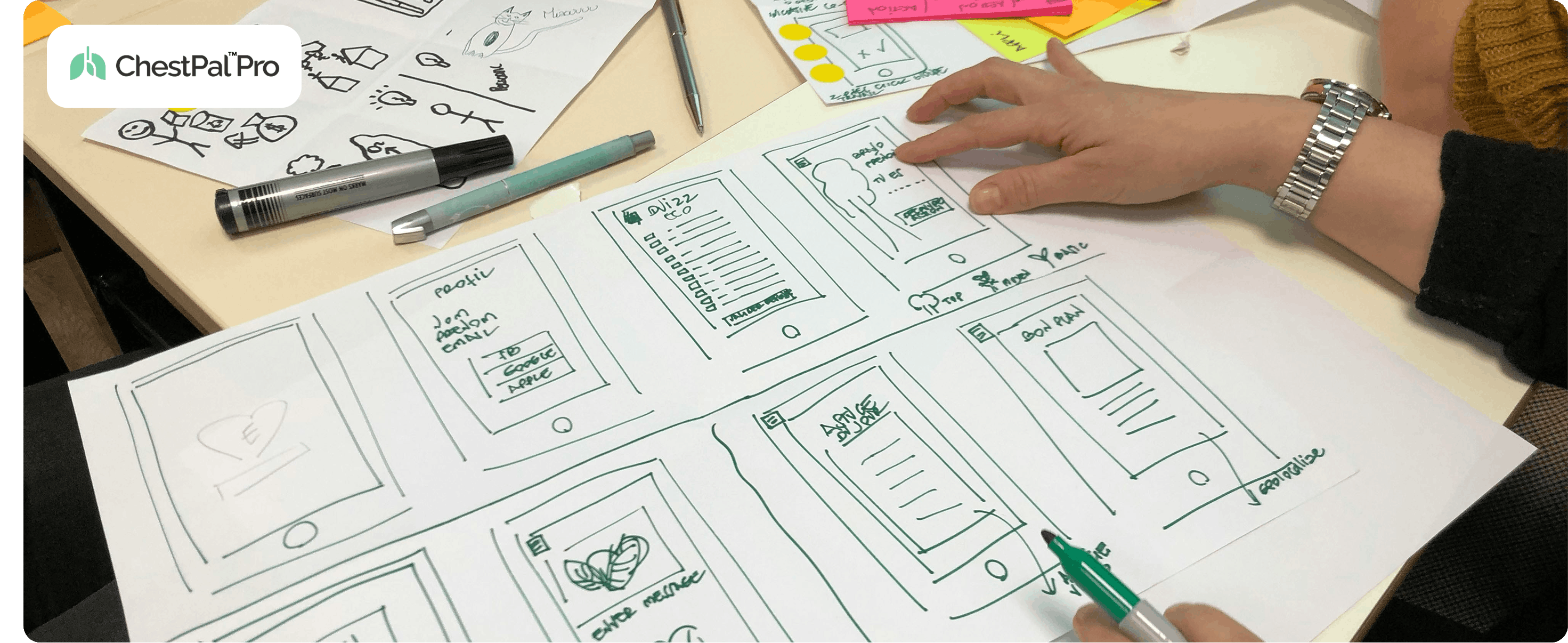

We kicked off with an immersion workshop, bringing together key stakeholders to dig into the product, the pivot, and the people it was now intended for. The ChestPal team demonstrated the device and walked us through the existing app, giving us a shared reference point from day one.
From there, we discussed the hardware roadmap (crucial, given the device was still evolving alongside our work), narrowed the scope of onboarding to what we were actually solving for, and aligned on what success looked like. ChestPal also provided us with an existing user risk assessment, flagging potential hazards throughout the user journey, which became a key reference point for everything that followed.
Rather than diving straight into redesigning, we started by testing the existing experience as a benchmark, with representative users. This gave us empirical data on where the opportunities were, rather than relying on assumptions.

A few things came through clearly:
Armed with that data, we got to work. One of the most impactful structural decisions was splitting the onboarding into two distinct phases: smart device setup, and breathing technique plus recording. Separating these two very different tasks reduced cognitive load significantly and gave users a much clearer sense of progress.
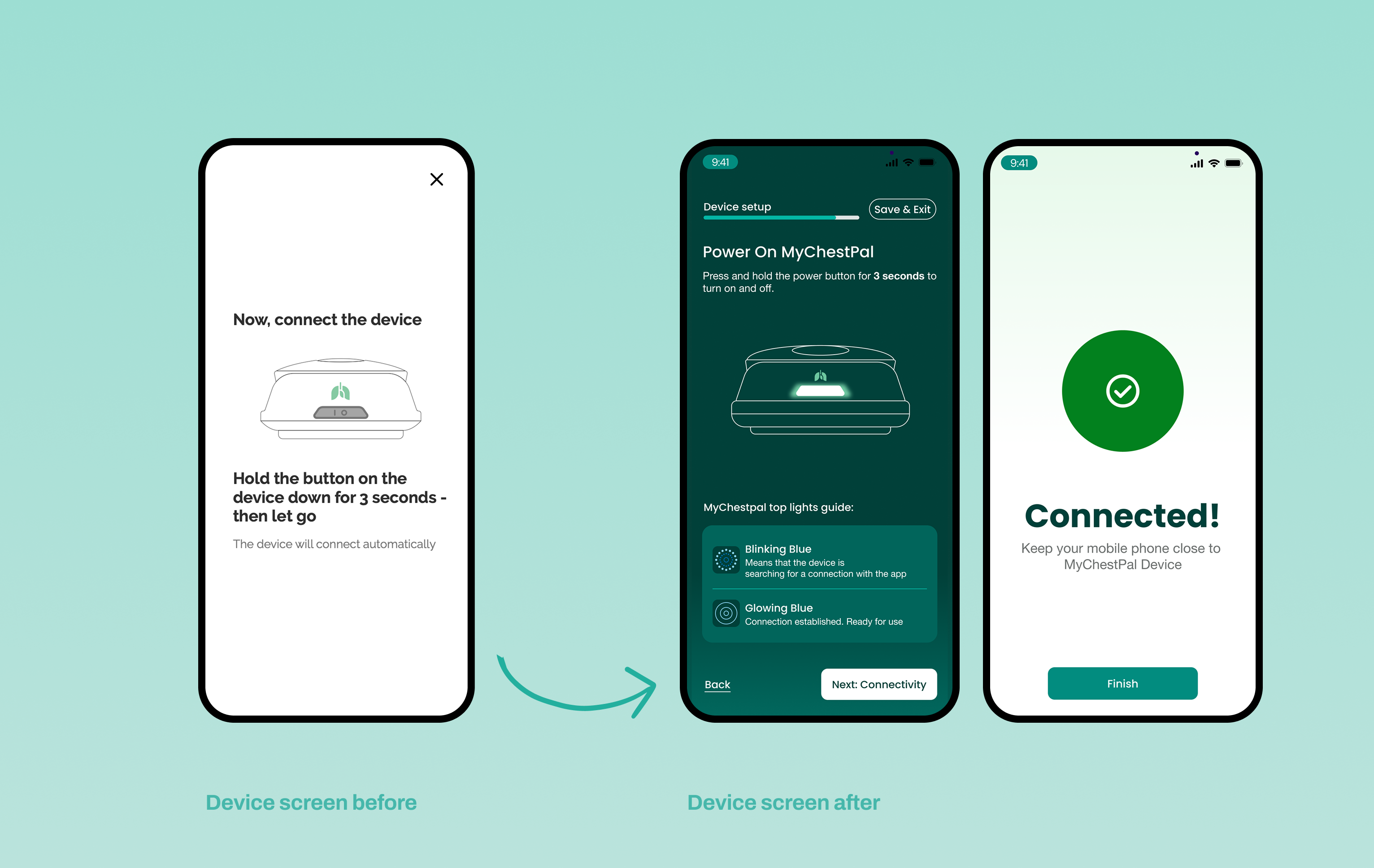
From there, we made a series of targeted design changes, each grounded in what we'd observed:

Before going back to real users, we ran an internal validation phase with ChestPal acting as subject matter expert. Walking through the updated user flows in wireframes, we checked every change against their risk log to make sure any hazards flagged in the risk assessment were being properly addressed. It was an important step in making sure our design decisions held up not just in principle, but against the regulatory standards that mattered.
Phase 3 brought us back to real users to test the redesigned experience. One finding that shaped our recommendations was a noticeable gap in digital competency across the participant group. Something as routine as Bluetooth pairing proved to be a genuine barrier for some users, which fed directly into guidance around how ChestPal should approach marketing and onboarding documentation going forward.
One of the more nuanced challenges of this project was running software testing while the hardware was still changing. Midway through, ChestPal moved from a hardware recording button to software-triggered recording, which meant our prototype needed to work alongside an older version of the app to fill the gap.
Having mapped the hardware roadmap during the kickoff workshop meant we could plan around this, but it reinforced a valuable principle: when software and hardware are out of sync, someone needs to actively bridge that gap during testing sessions. Working in pairs made all the difference.
The impact was measurable. By focusing entirely on design, we significantly improved an essential onboarding experience that needed to work not just for users, but for regulators too. We also successfully supported ChestPal in securing cash funding through the programme.
Major errors in the onboarding flow were reduced by 47%. Of 16 benchmarks tracked, 11 came in above 80% success rate, with 7 of those hitting 100% accuracy. The errors that remained after Phase 3 were occurring post-onboarding, outside the scope of what we'd been brought in to solve.
To get there, we delivered across 50 days:
The project also left us with something valuable internally. Running rigorous user testing in a regulated medical context was new ground for us, and we came out of it with a best practice guide covering everything from consent forms and session recording to hazard logging, something that will shape how we approach similar projects going forward.
None of it would have worked without the foundations being right. Clear scoping, a well-structured RACI, and a client who was as invested in the process as we were made this one of those projects where everything clicked. We can't wait to see ChestPal make its mark on the US market and get into the hands of the people who need it most.

Let's see what we can make together.
From startups to scaleups and enterprise, we're always happy to talk to impact-focussed and ambitious organisations. Use our quote creator to get a better idea of scope, timescales and next steps.